Description
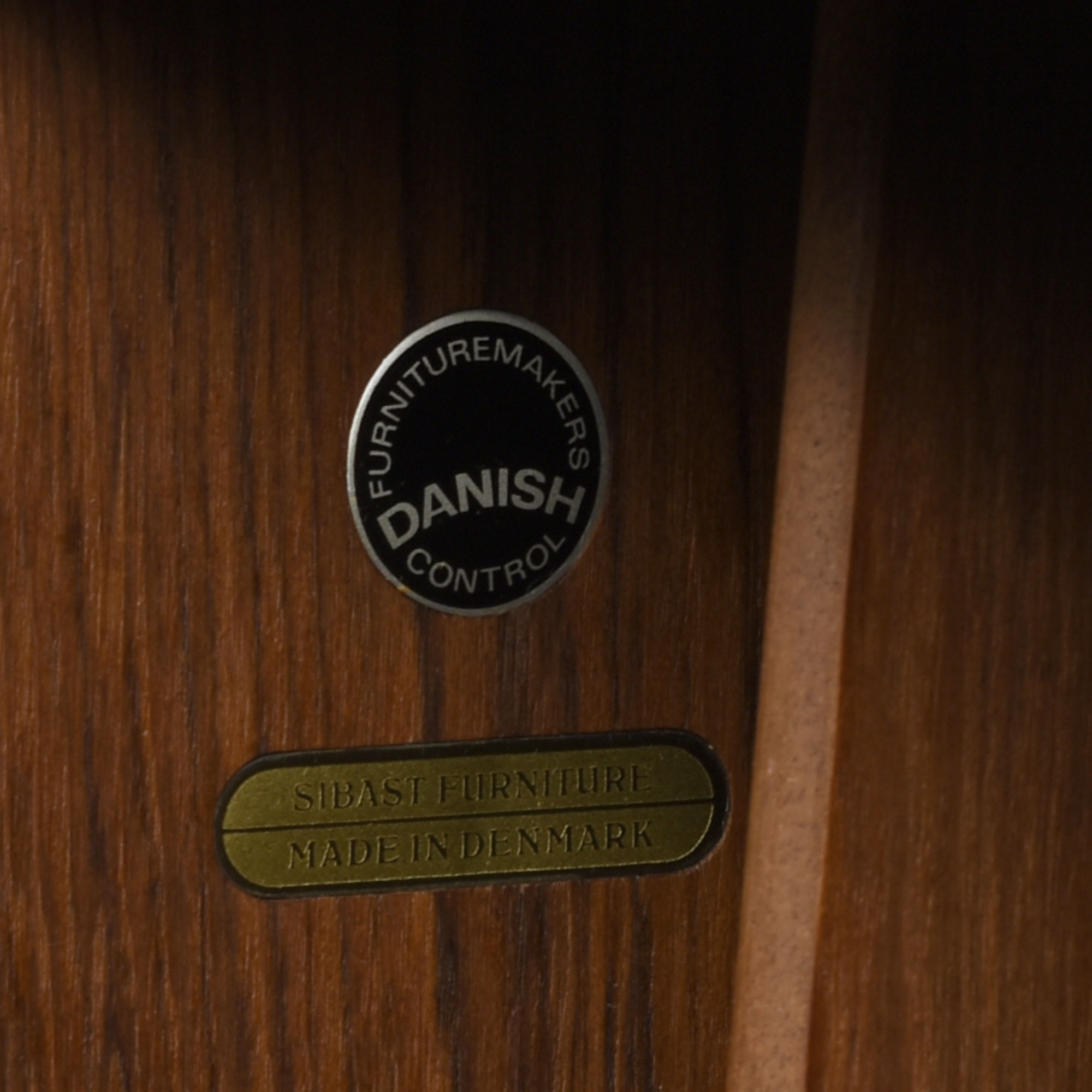
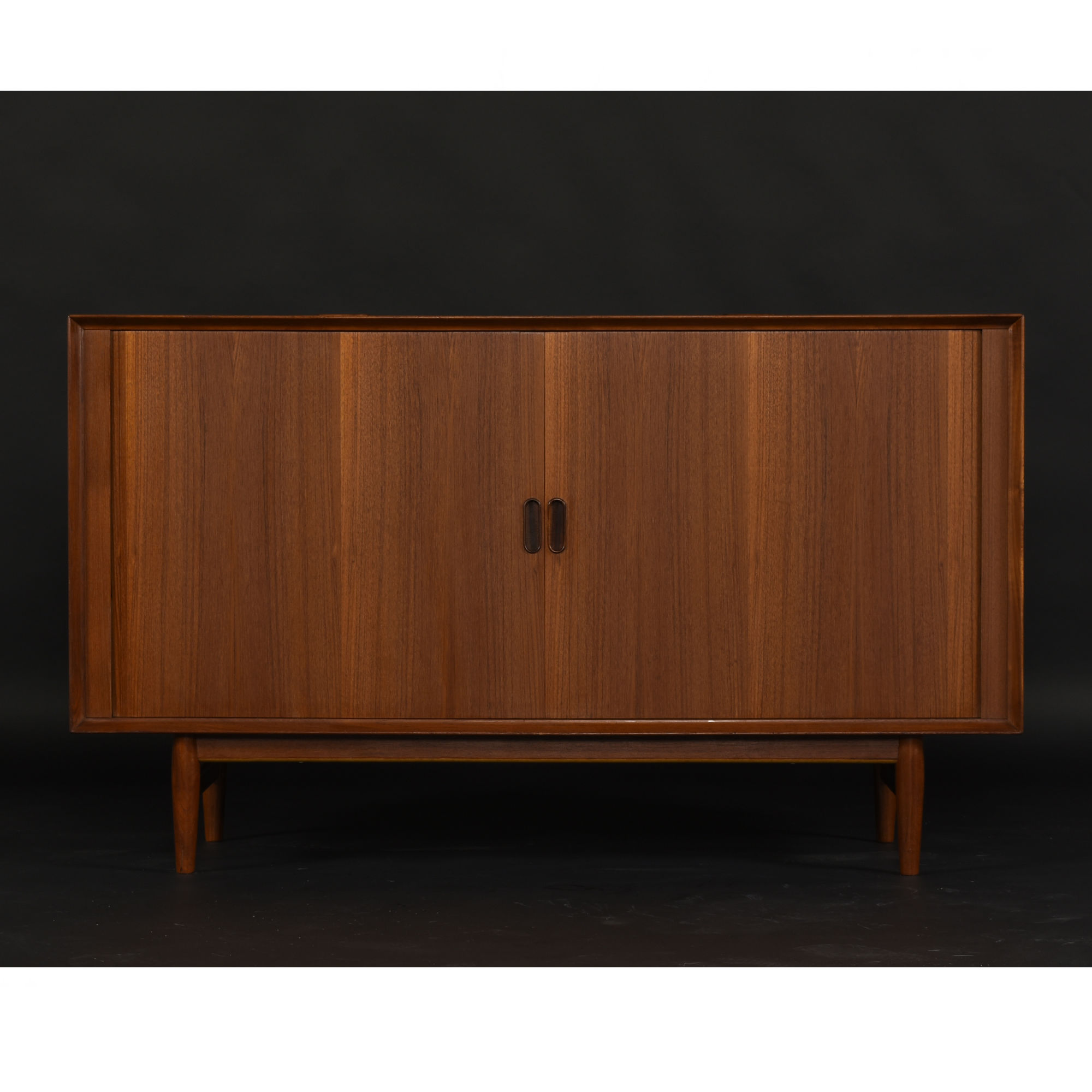
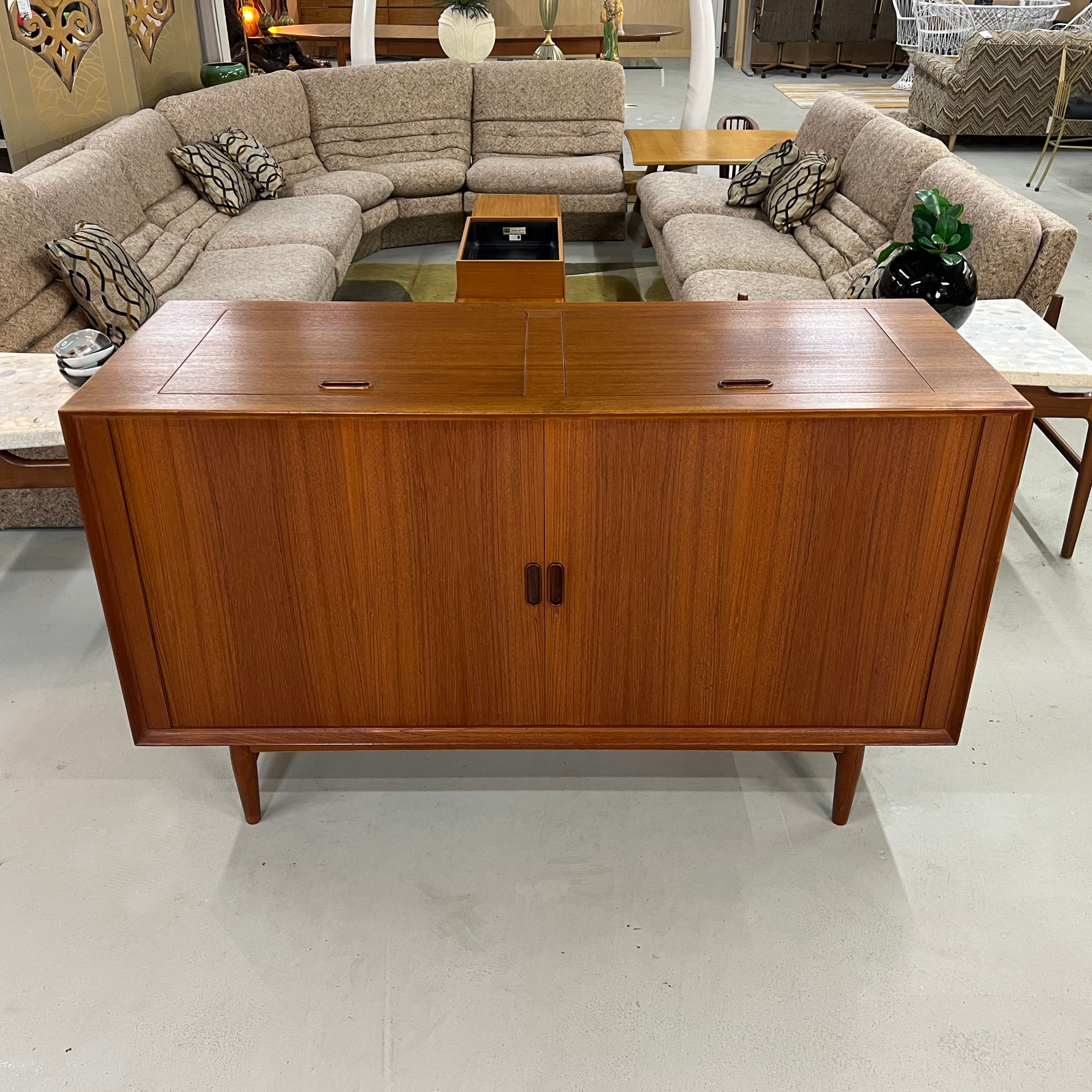
A striking record and stereo console designed by Arne Vodder for Sibast Møbler, Denmark, crafted in rich teak and bearing the original Sibast Furniture and Danish Furnituremakers Control labels.
Arne Vodder trained as an architect under Finn Juhl, the designer widely credited with carrying Scandinavian modernism into the American market after the war, and Vodder carried that architectural discipline into everything he made. Where much Danish seating from the period favored quiet, restrained forms, Vodder’s case pieces are where his design instincts really came forward. He was known for asymmetry and inventive internal arrangements, credenzas and sideboards with sections of varying size and purpose, sculpted pulls in place of applied hardware, and a general refusal to treat storage furniture as an afterthought. His pieces for Sibast, France & Søn, and Fritz Hansen remain some of the most sought after case goods of the Danish modern era, and this stereo cabinet shows the same sensibility applied to a genuinely unusual form.
Sibast itself has a rich history behind the name on the tag. The firm began in 1908 as a small rural Danish carpentry workshop under Peder Olsen Sibast, and was carried forward by his son Helge Sibast, whose own design work, including the celebrated Sibast No. 7 dining chair, helped define the company’s postwar identity. Helge brought in outside talent to broaden the range, including Vodder, along with Piet Hein and Grete Jalk, and it’s that collaboration that produced pieces like this one.
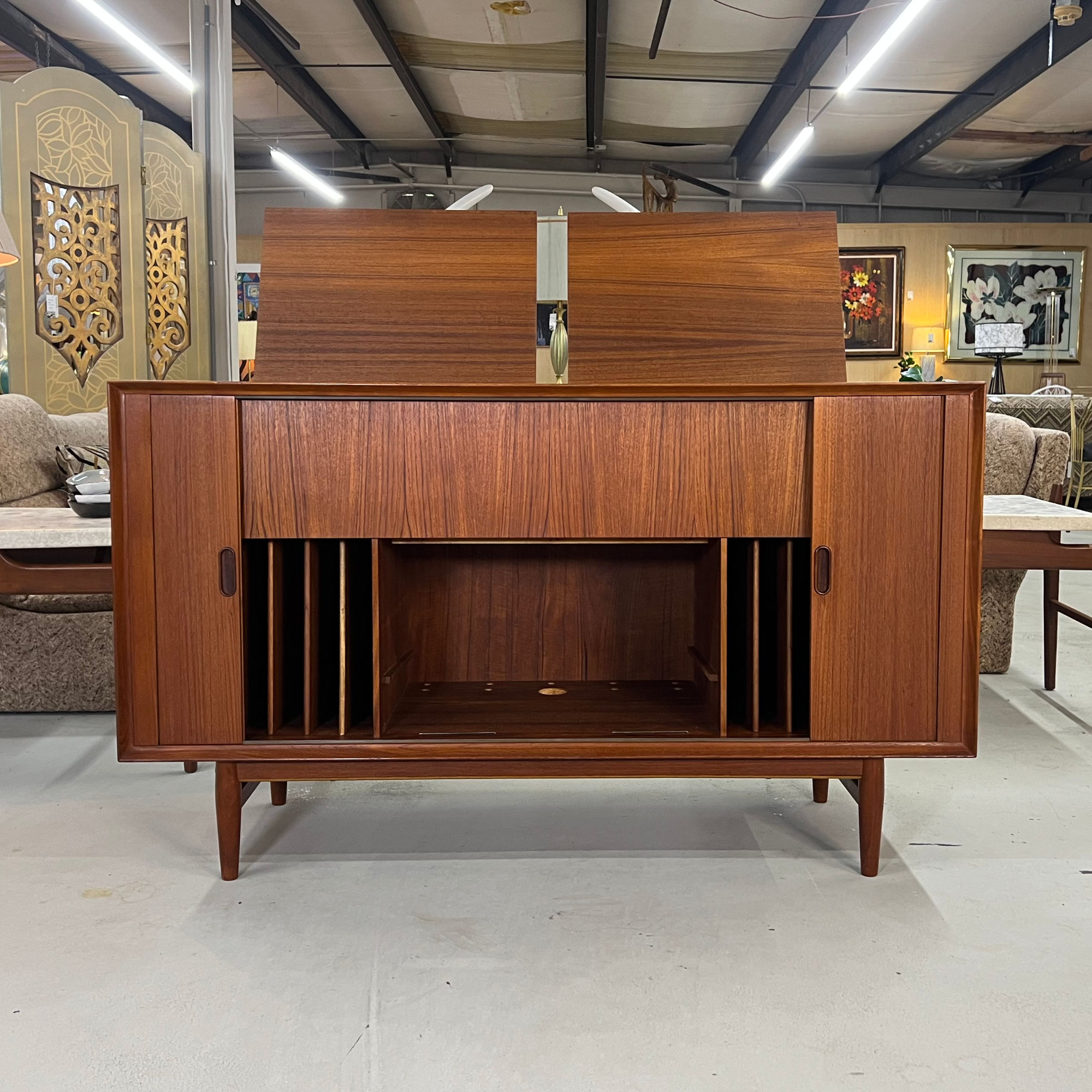
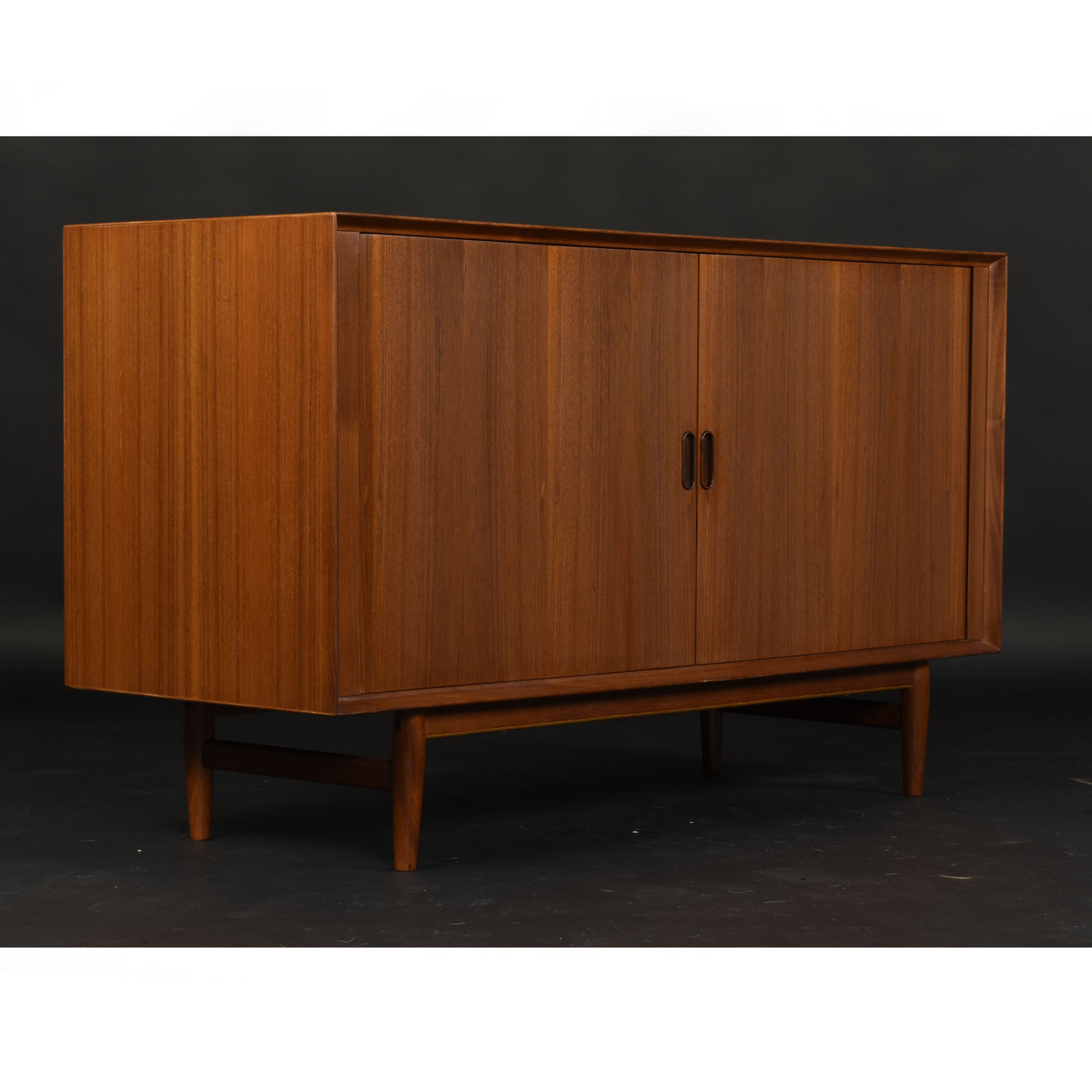
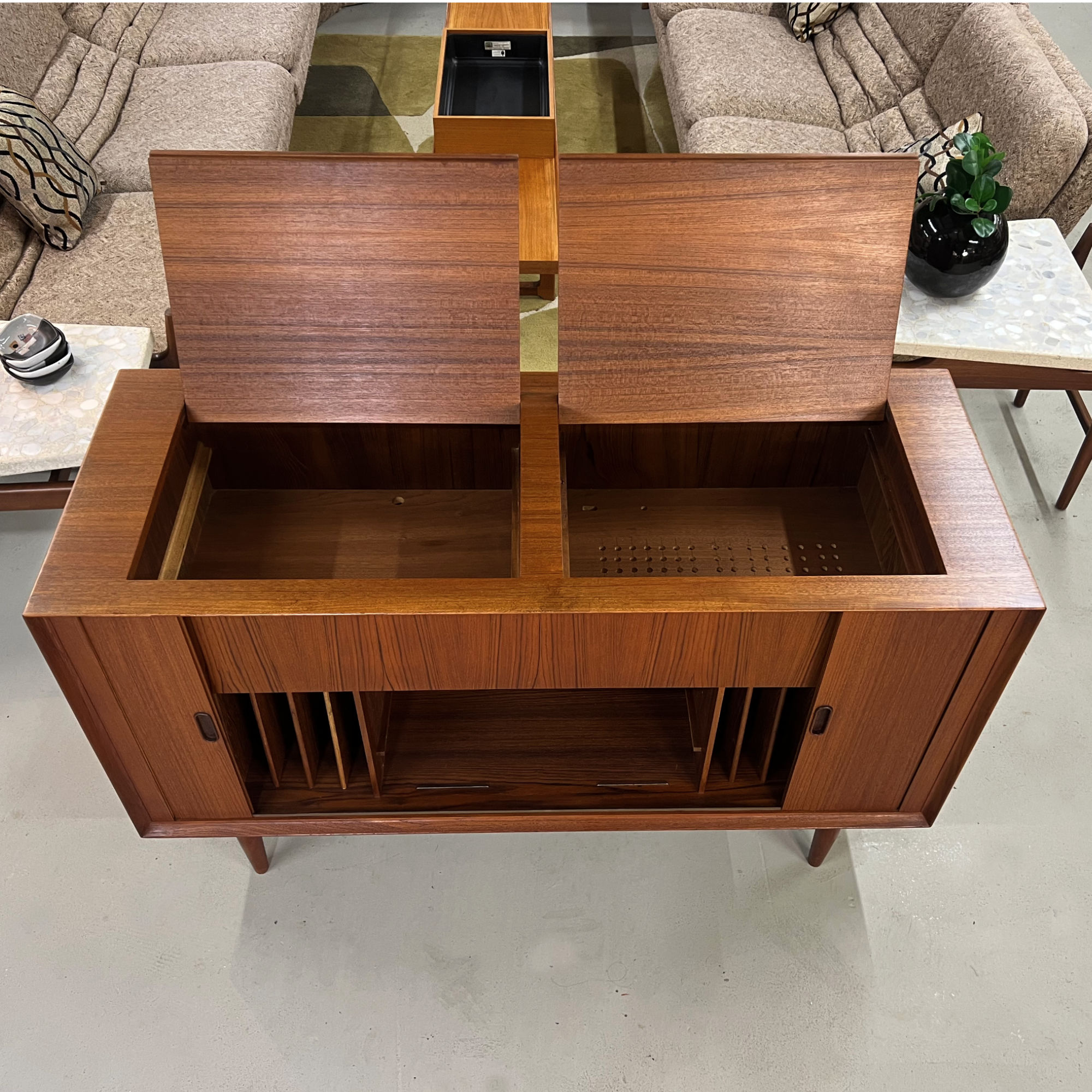
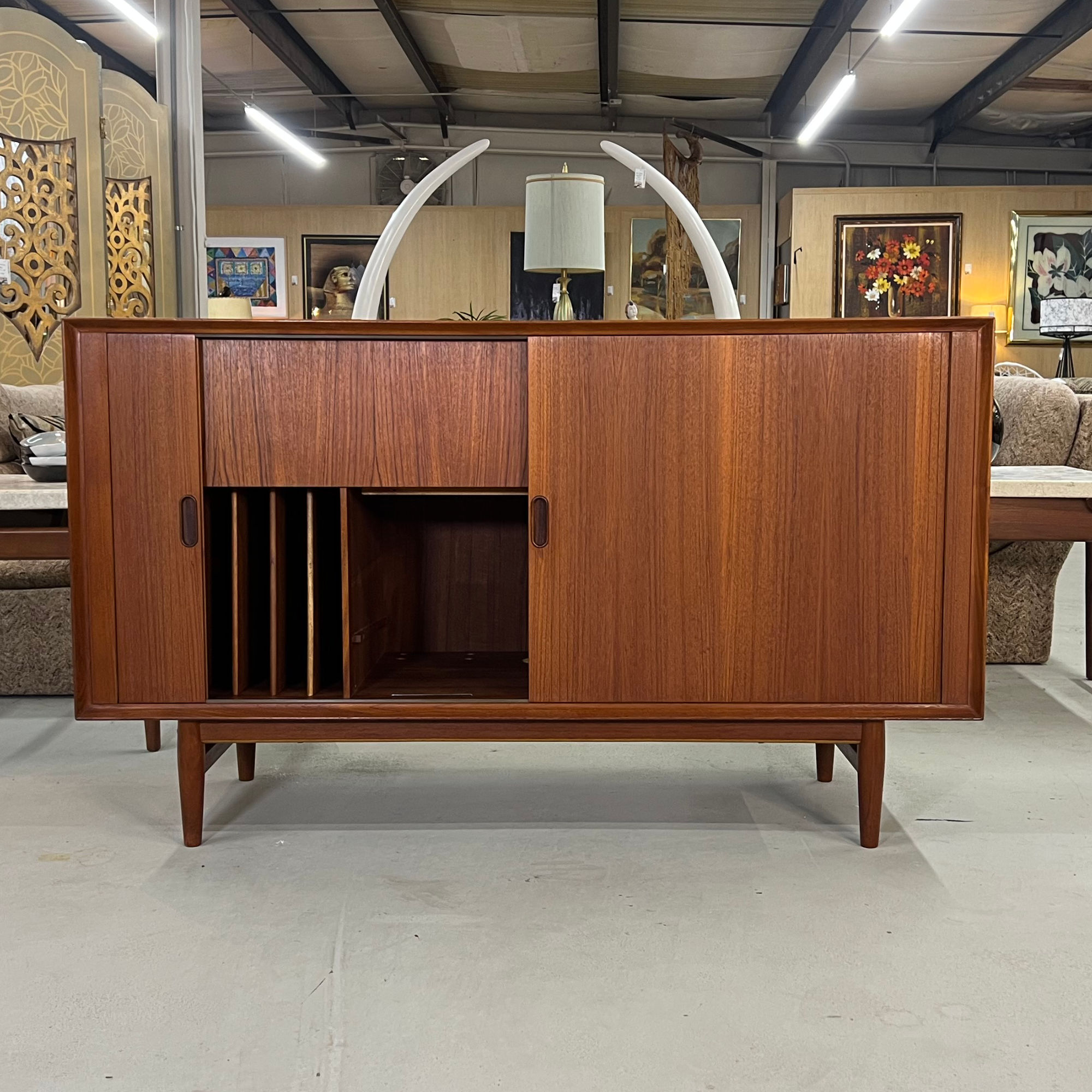
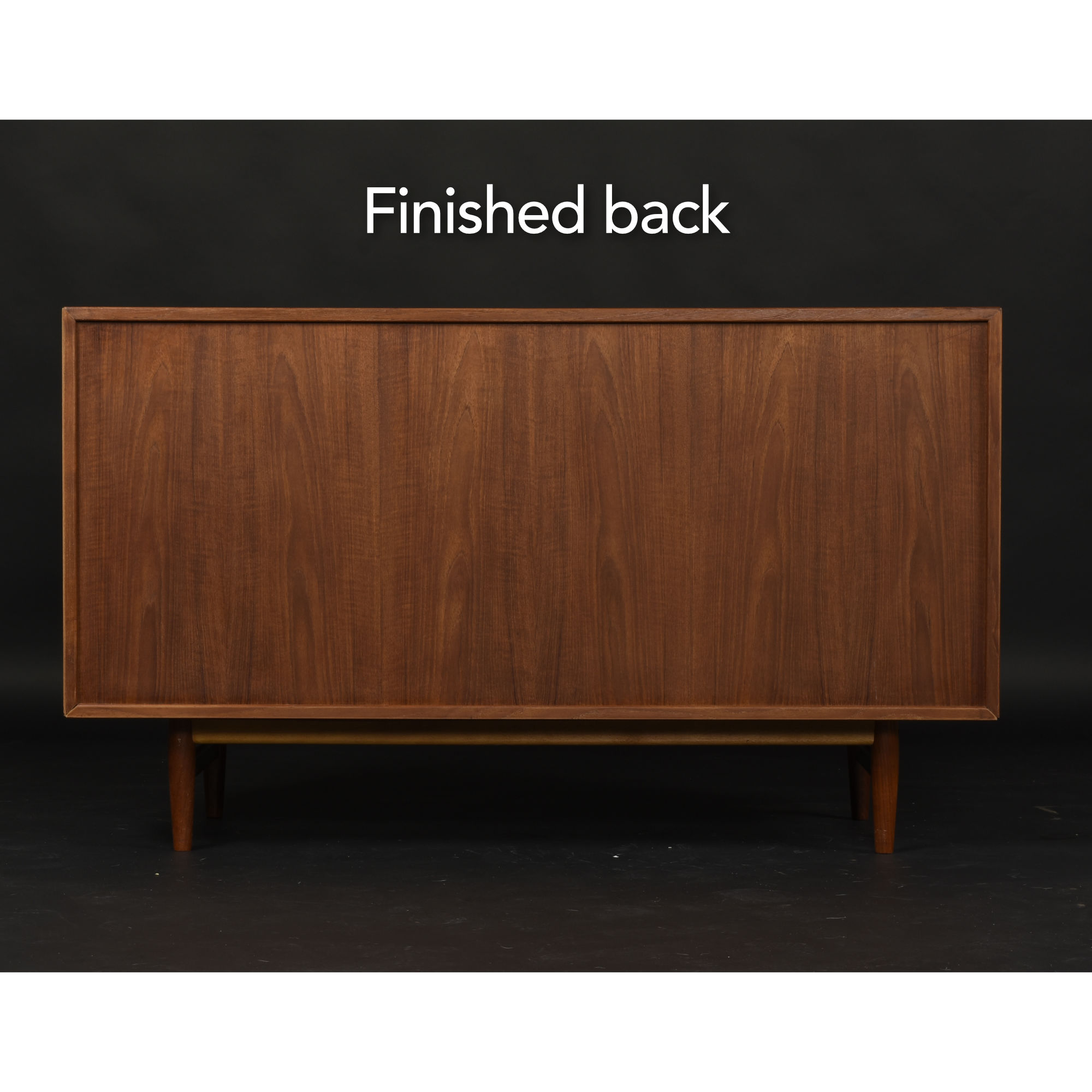
Stereo and record cabinets of this design are considerably harder to come by than Vodder’s credenzas and sideboards, which turn up with some regularity. This particular example is further distinguished by having top compartments that were never cut for a drop-in turntable, meaning there’s no old hardware to remove and no hole to patch before fitting modern equipment. What you get is a clean, practical cabinet, ready to house high end gear on your own terms. The lower section is fitted with sliding tambour doors that roll smoothly into the cabinet body, revealing a record storage bay divided by slender teak uprights on brass rails, along with an open bay suited to an amplifier or additional components. Above, twin lift lids open independently on sculpted teak pulls to expose the two concealed top compartments, equally at home holding a turntable and electronics or repurposed as a bar for glassware and bottles. The cabinet is finished on the reverse, allowing it to be placed freestanding in a room rather than against a wall, a detail typical of the era’s higher production pieces. It stands on tapered round legs with a brass stretcher rail beneath the case, a signature Sibast touch.
Sourced and cleaned in preparation for sale, the piece presents with warm original color and grain throughout.
Dimensions:
31 3/4″ H x 54″ W x 20 1/2″ D
(80.6 cm H x 137.2 cm W x 52.1 cm D)
Condition:
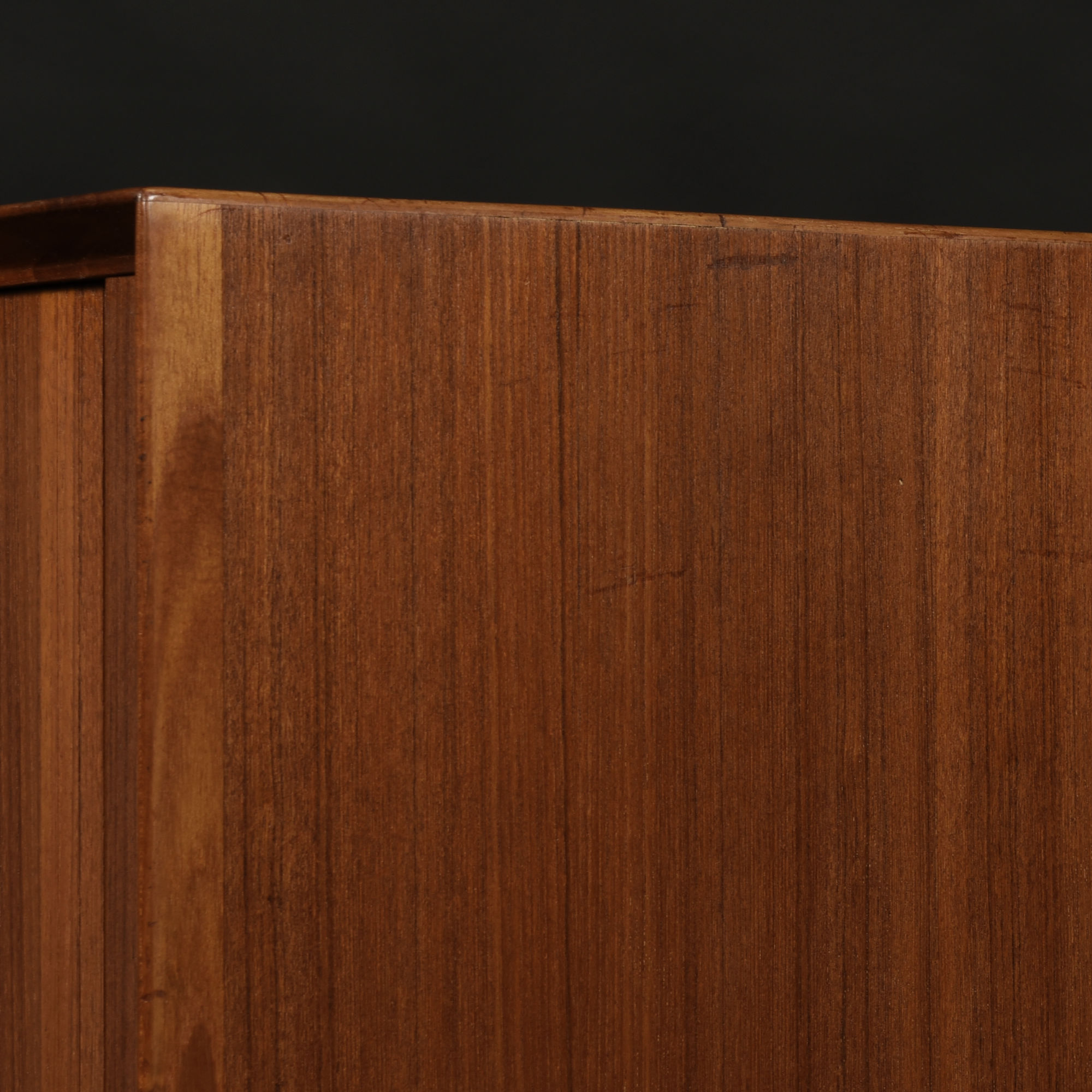
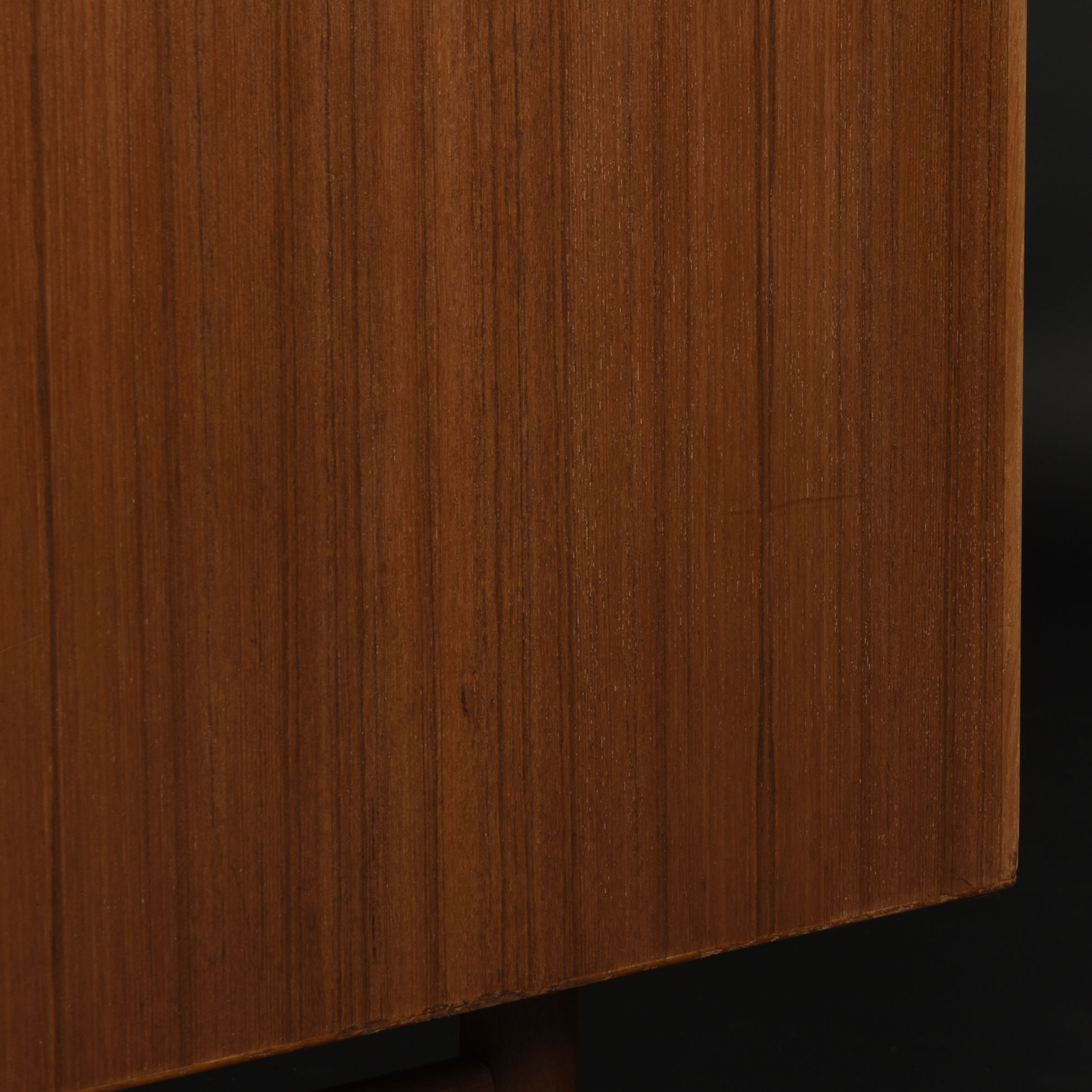
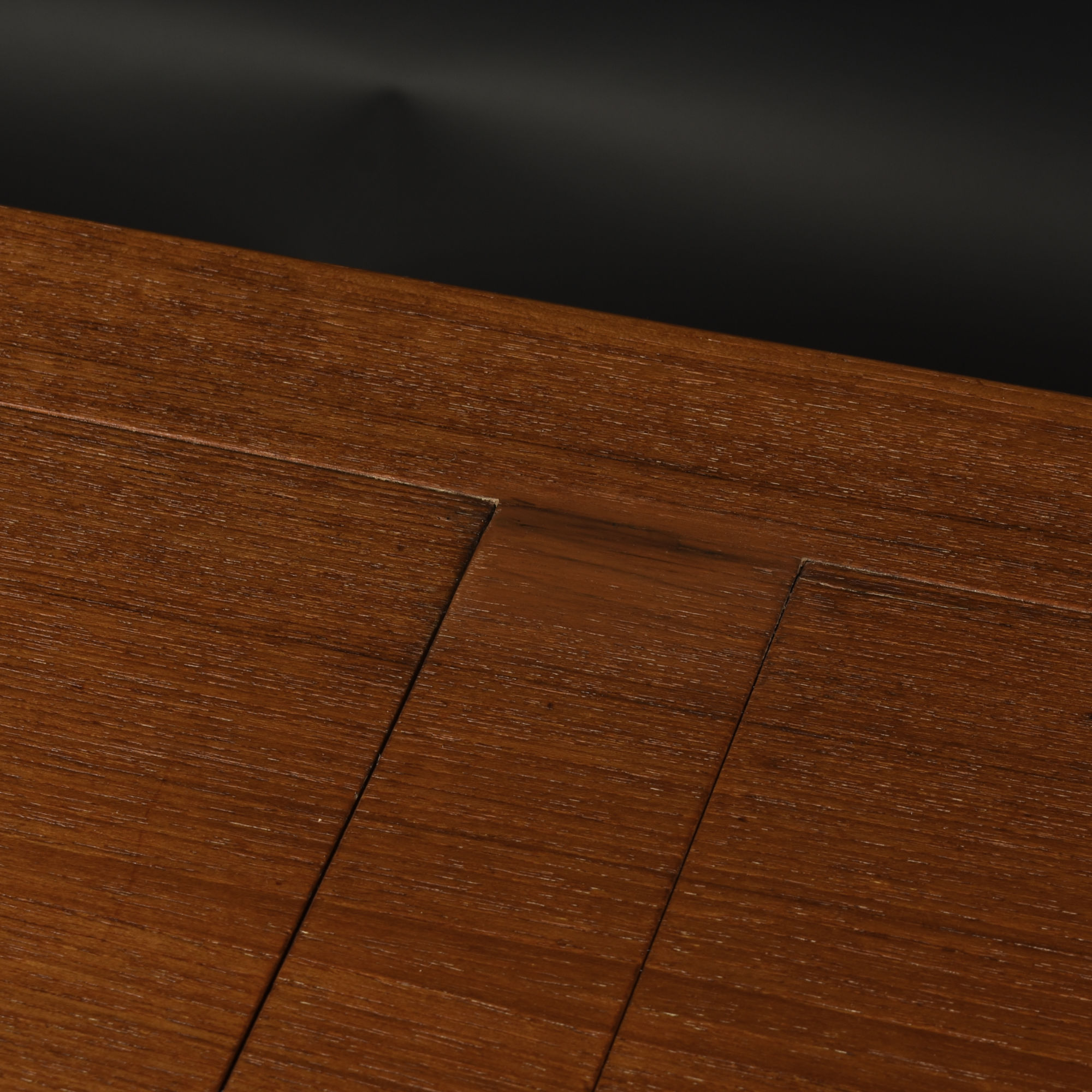
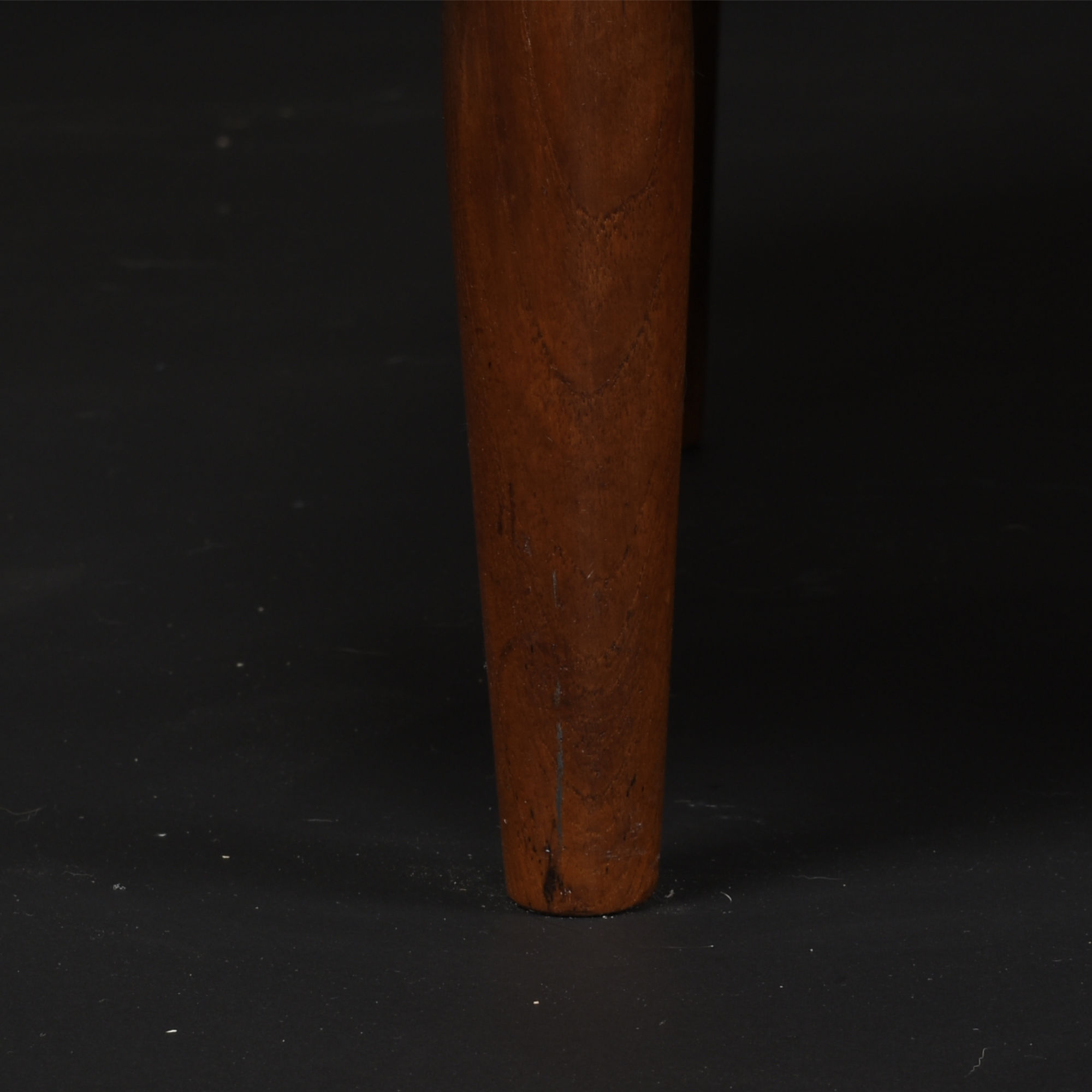
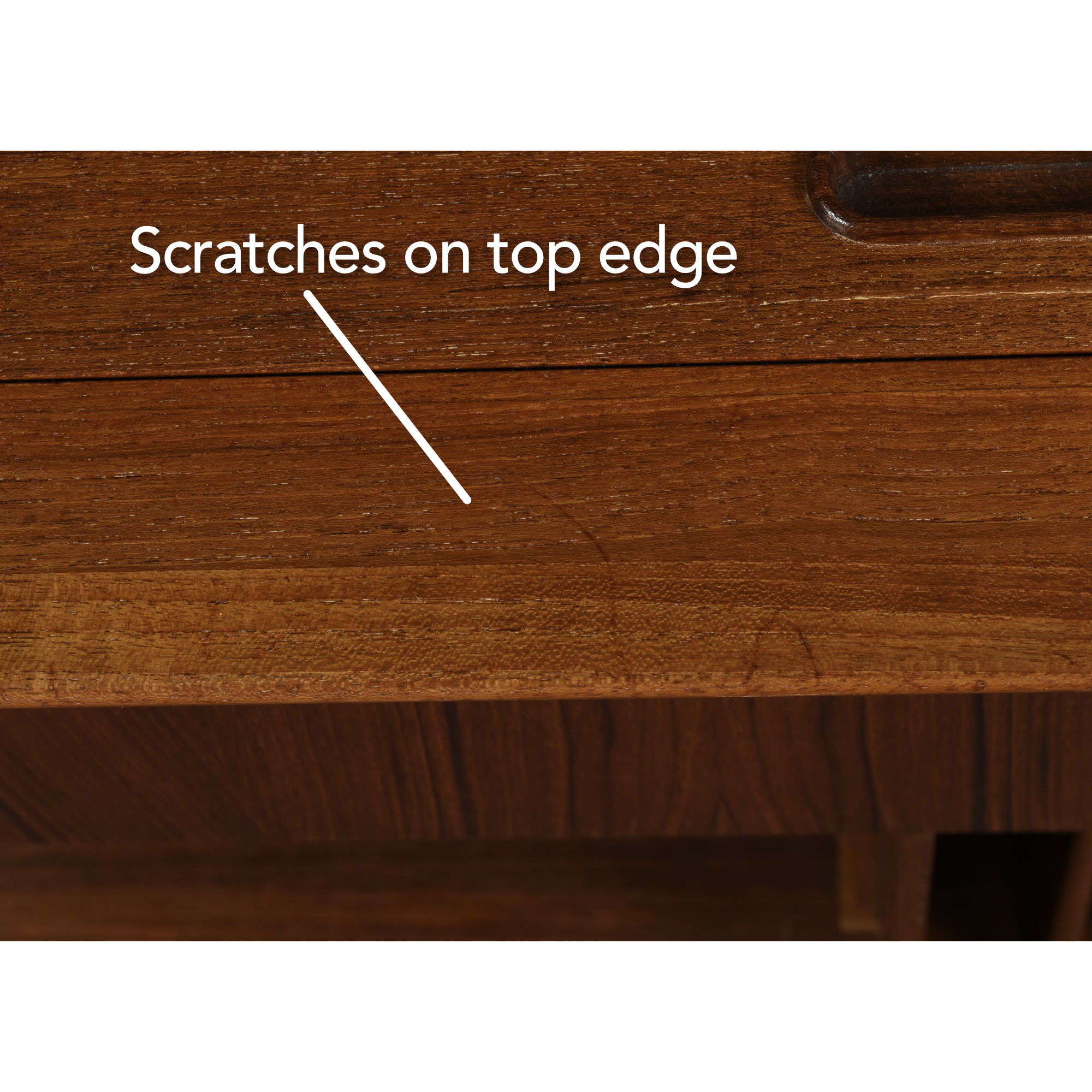
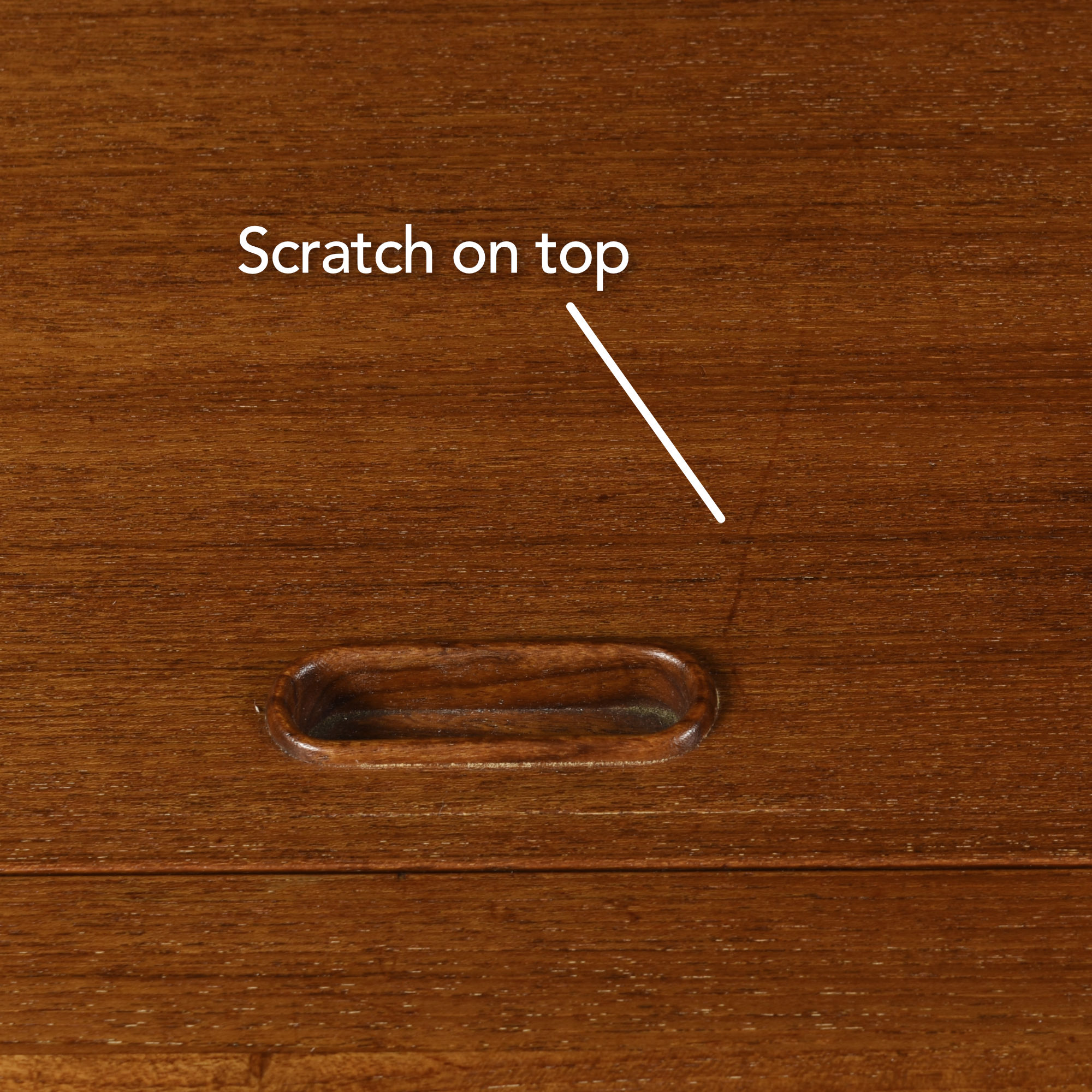
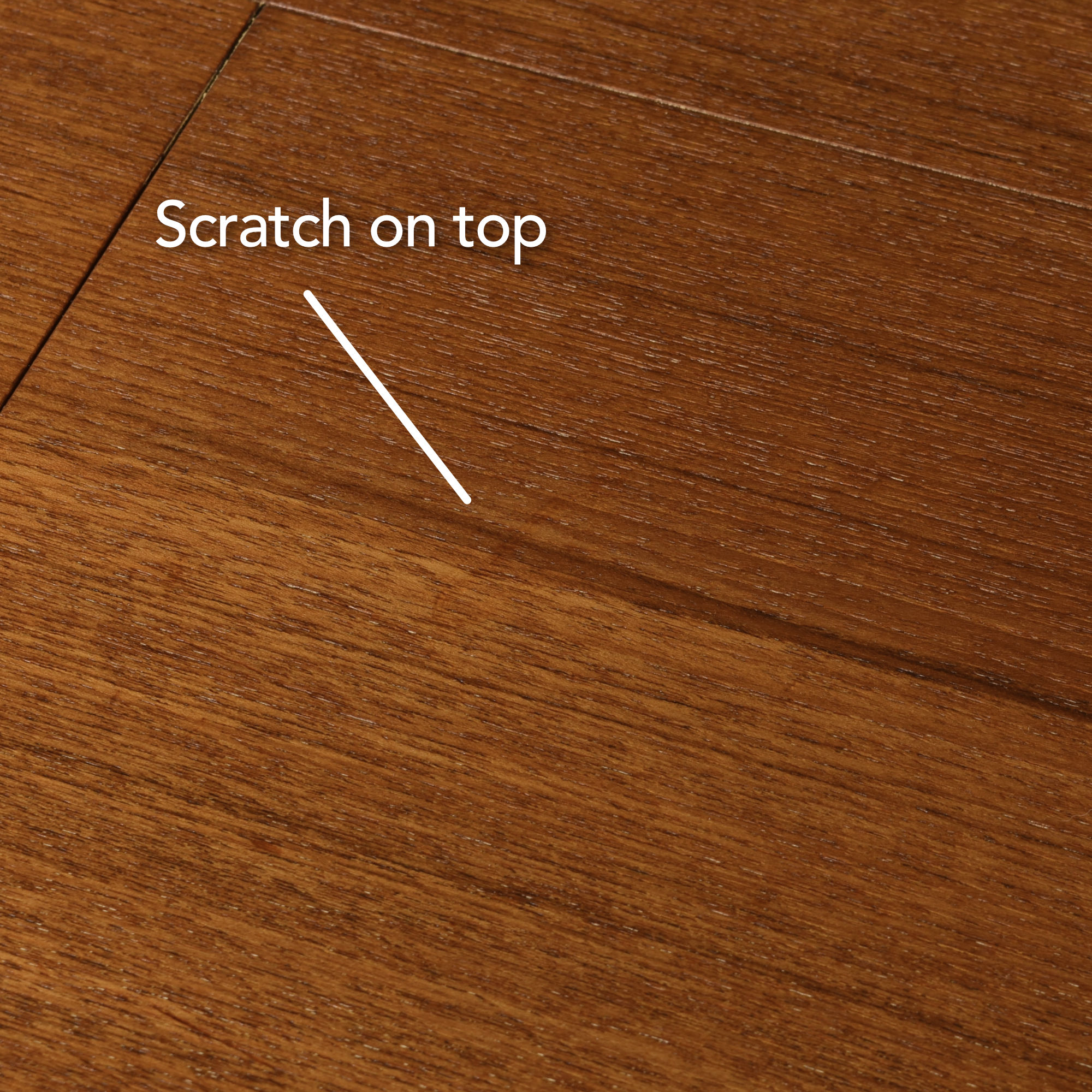
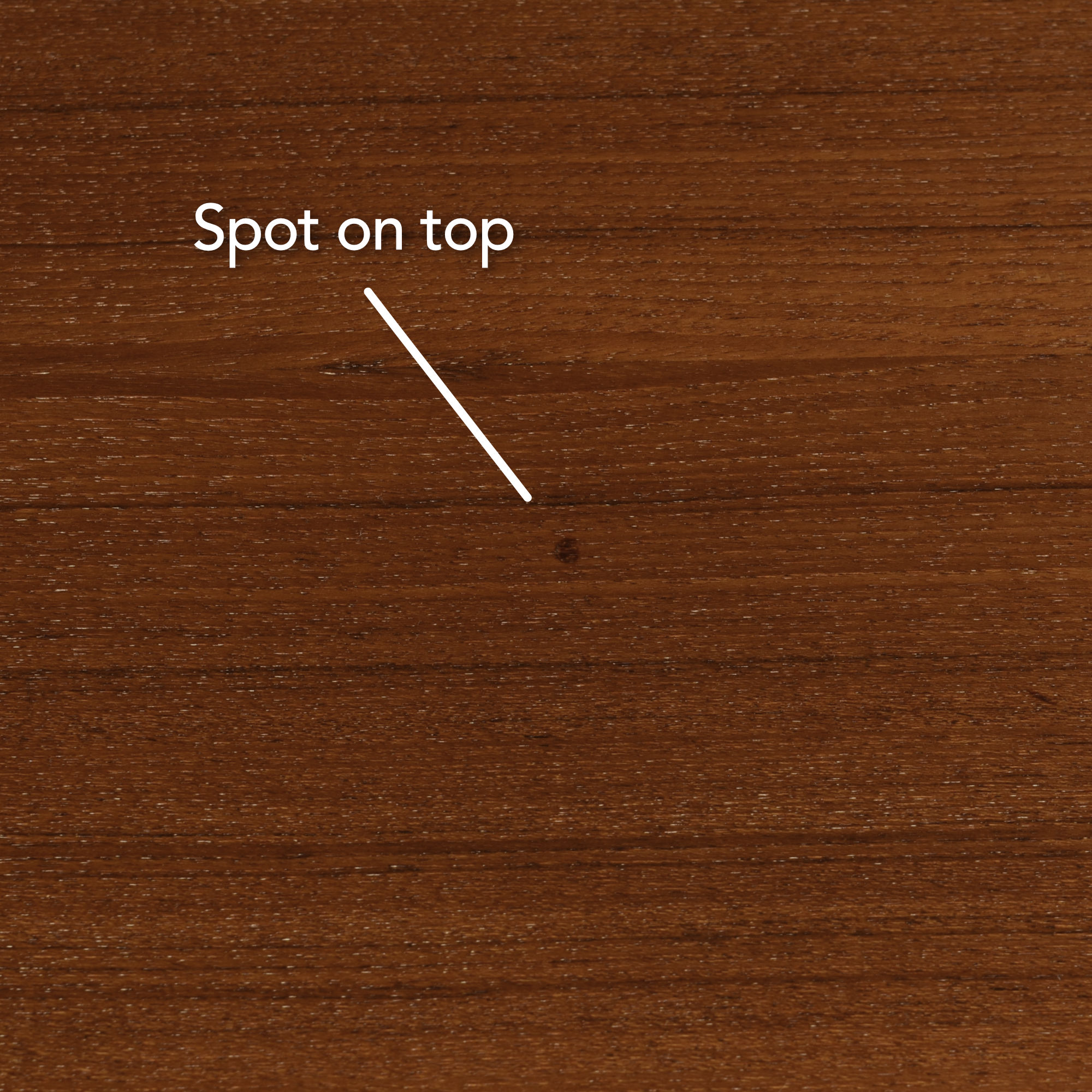
Good vintage condition, commensurate with age. The top shows one larger repair along with small scratches, discoloration marks, and light dents, concentrated mostly on the front edge. The front face has some minor discolored spots and scratches. Both sliding doors open and close, though the right door closes slightly less flush than the left. The side panels show some dark marks and scratches near the top edges. One of the eight record dividers has a front edge that is darker than the rest. The lower front lip of the cabinet has minor dents. The legs are in good condition with no significant flaws. The back panel, while finished, is lighter in tone than the rest of the case but otherwise free of notable imperfections.