Description
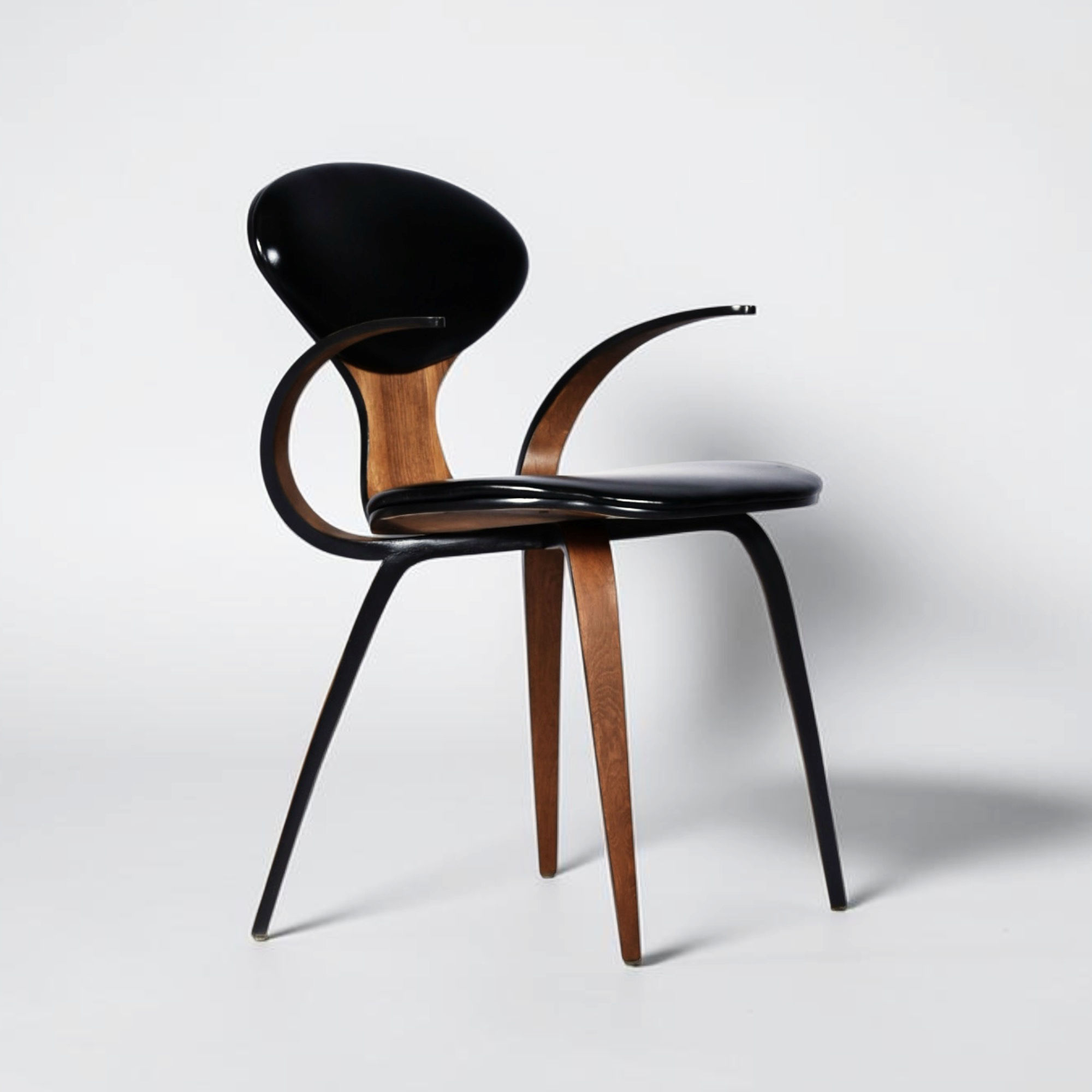
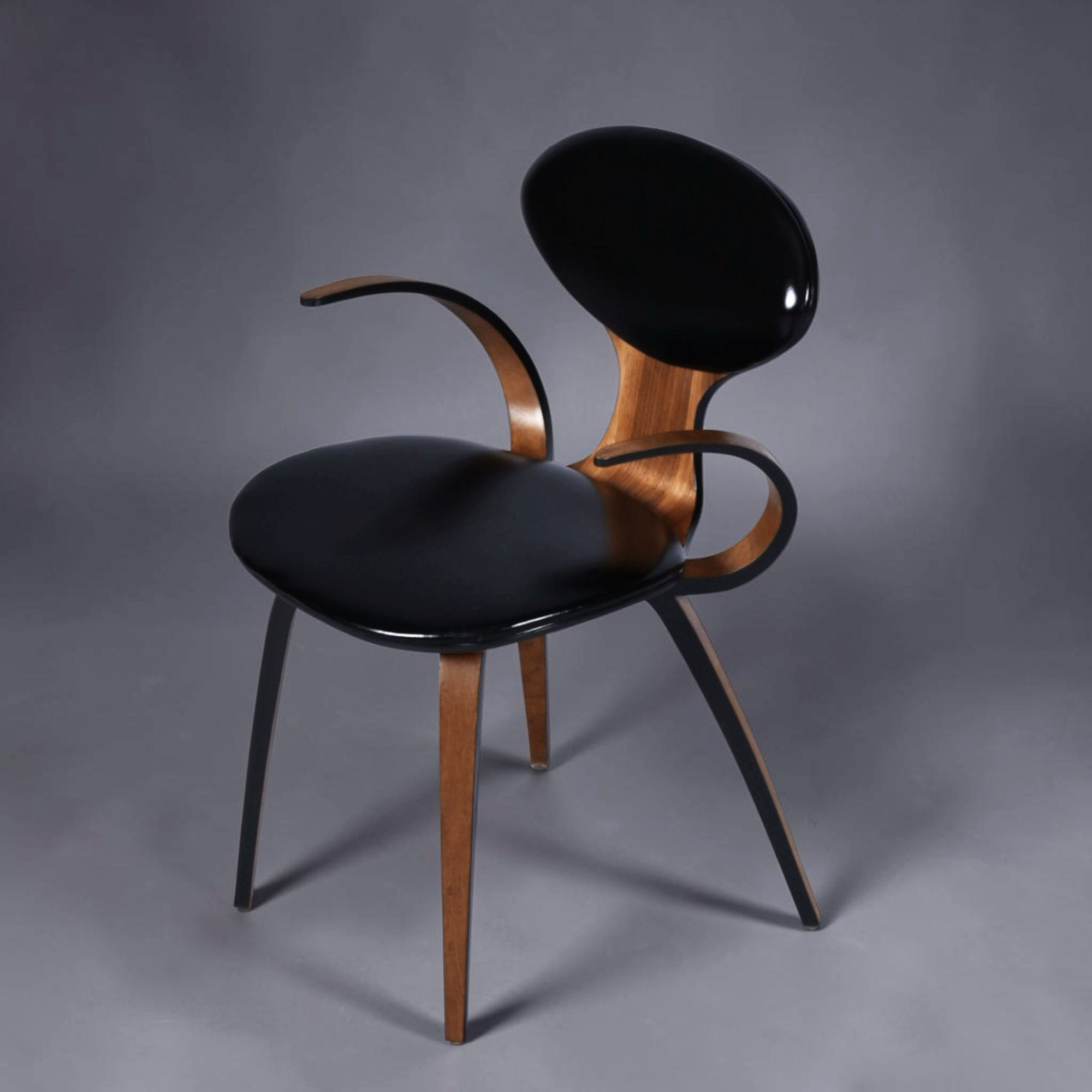
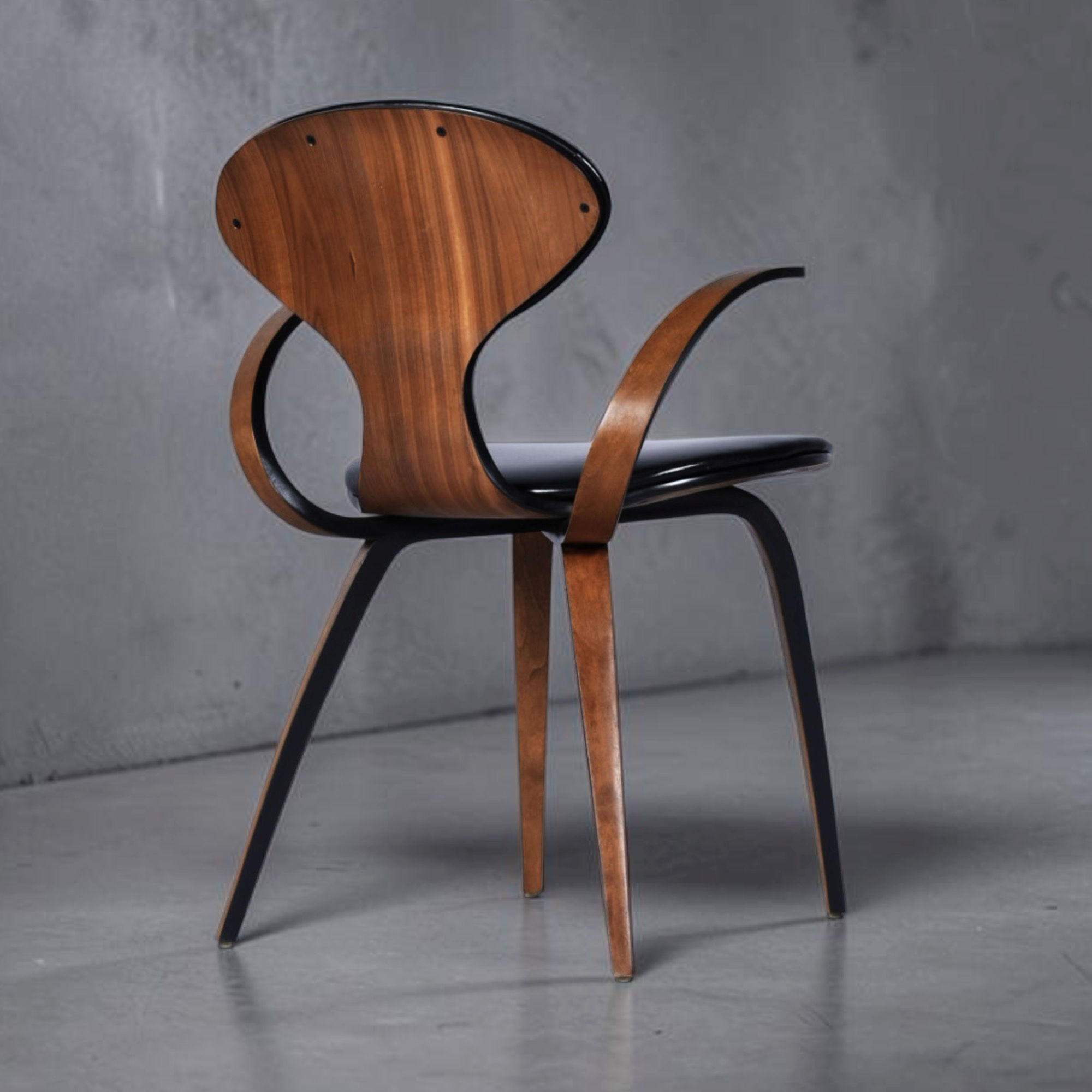
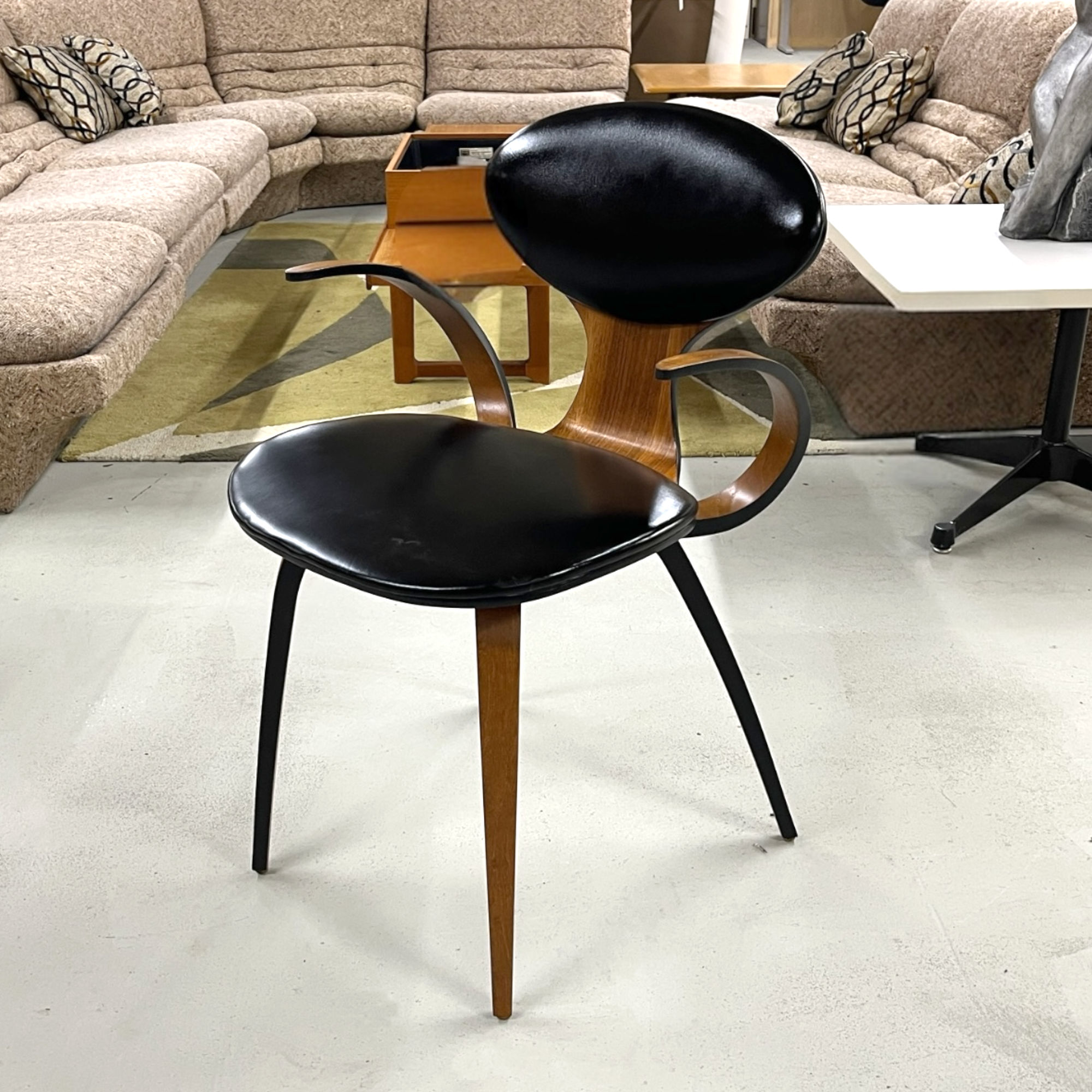
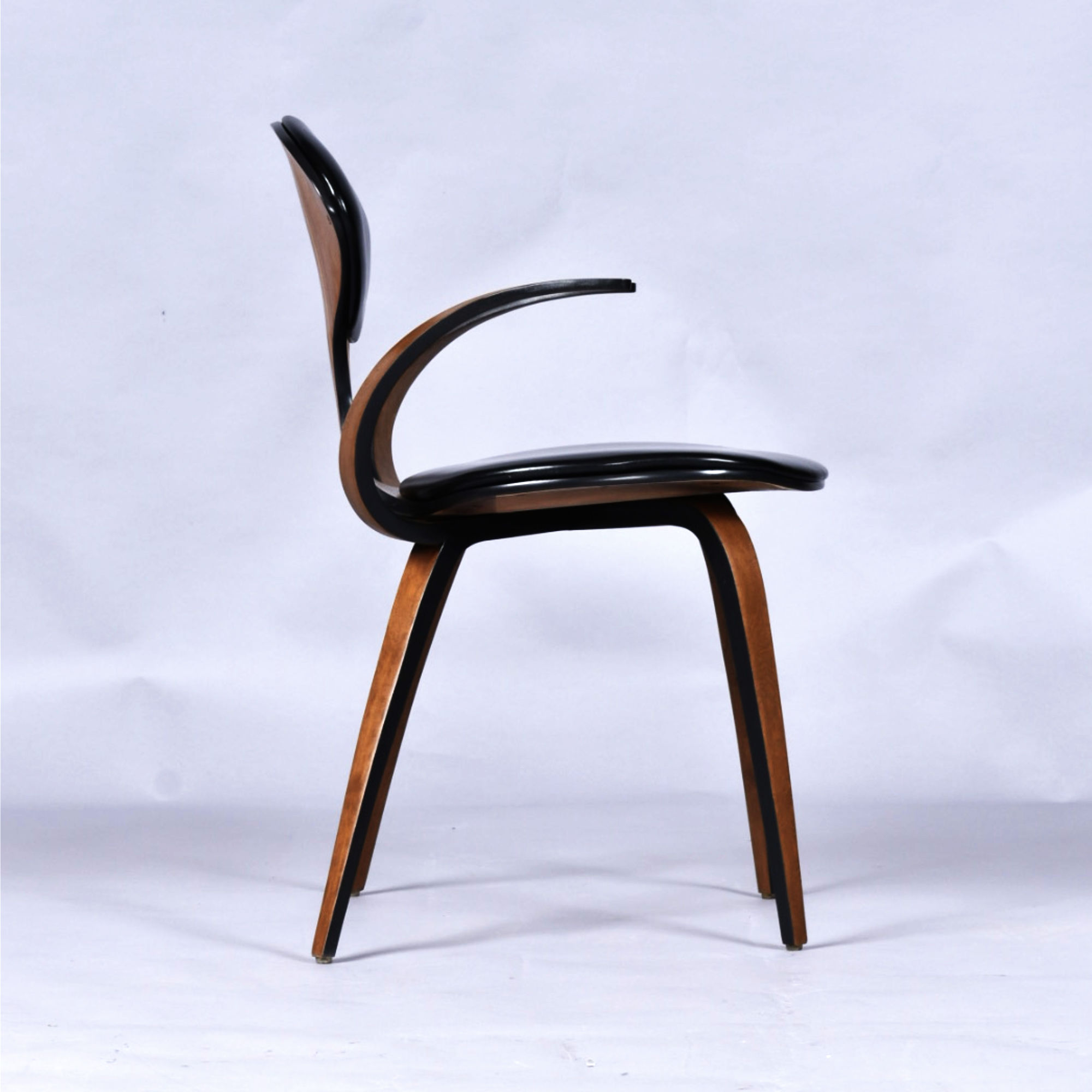
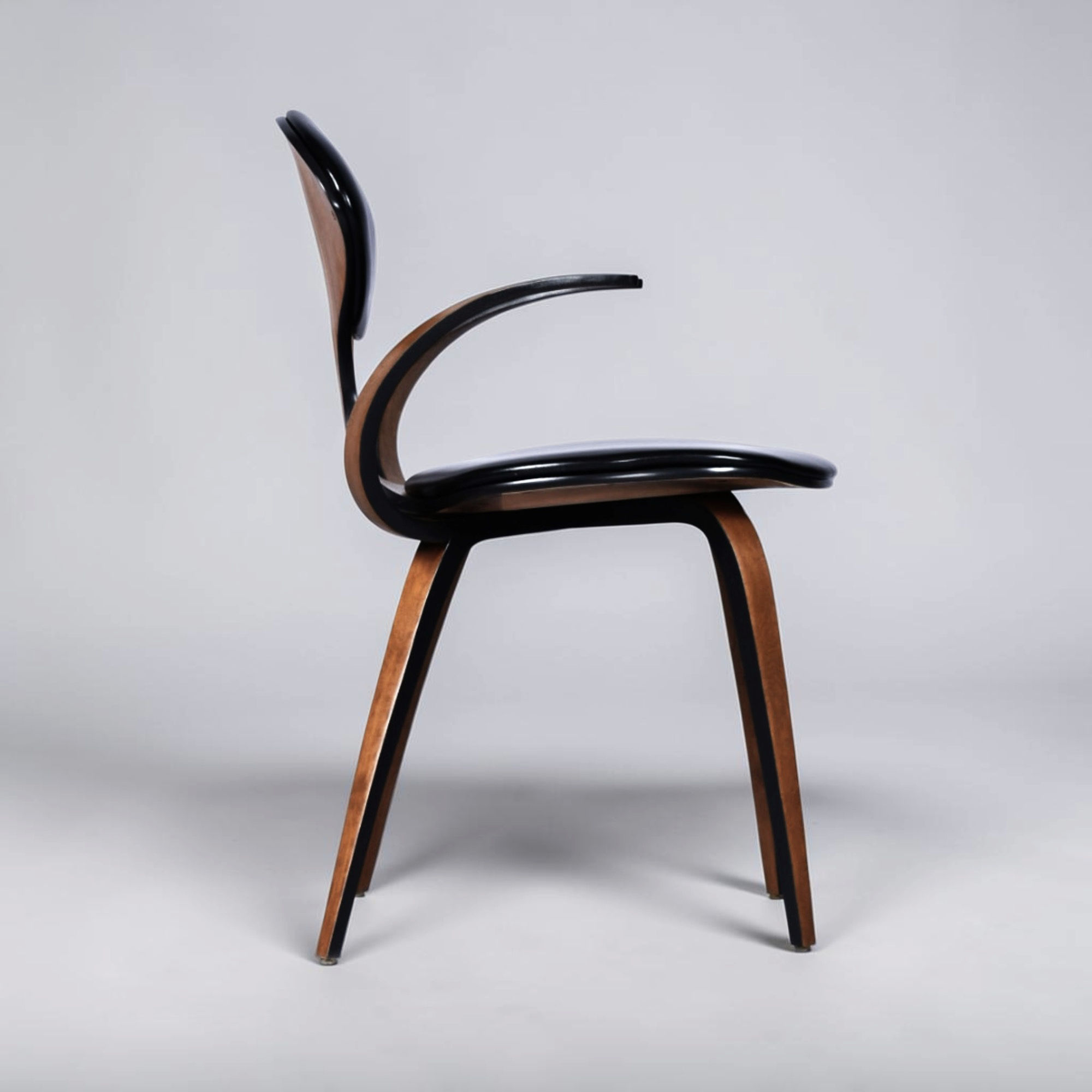
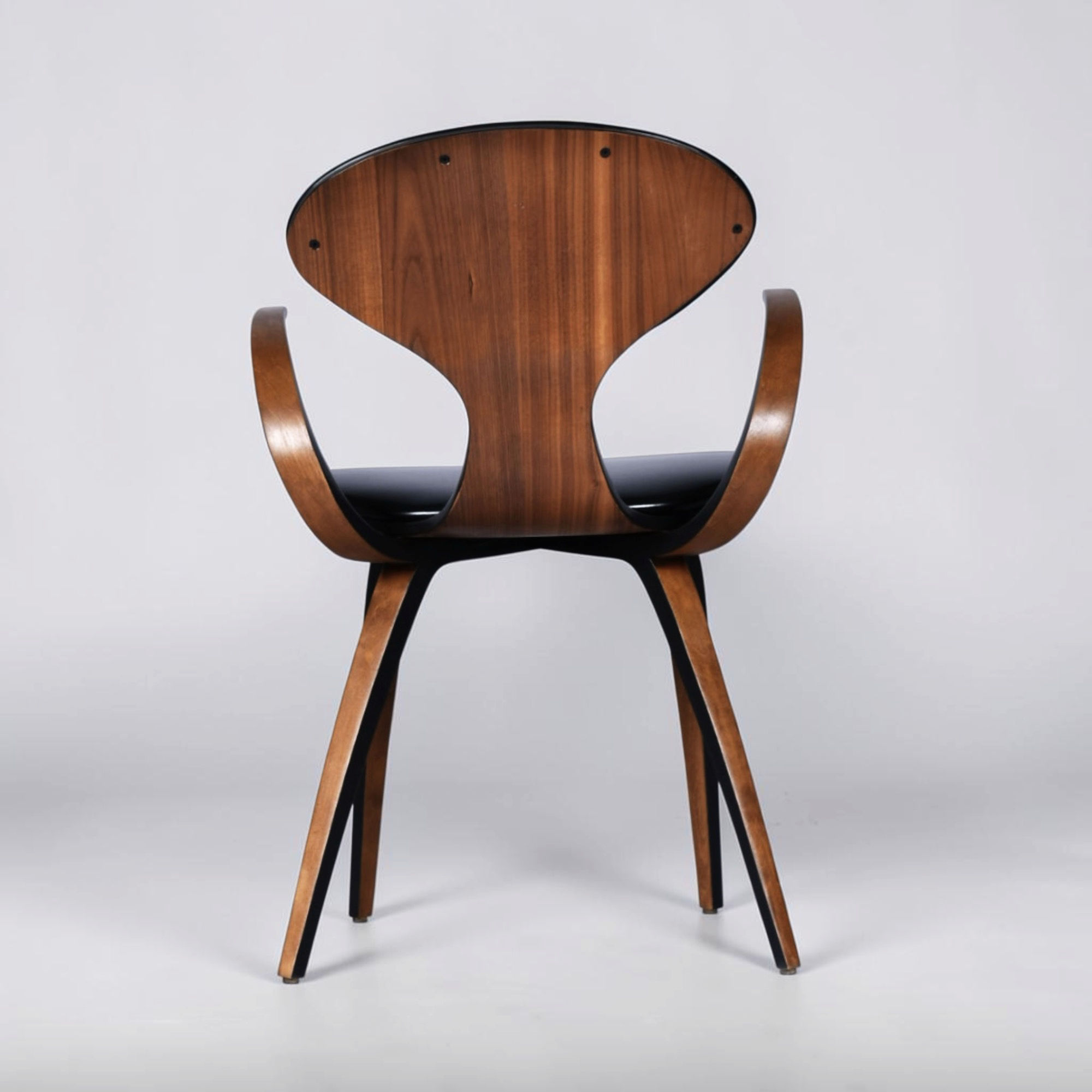
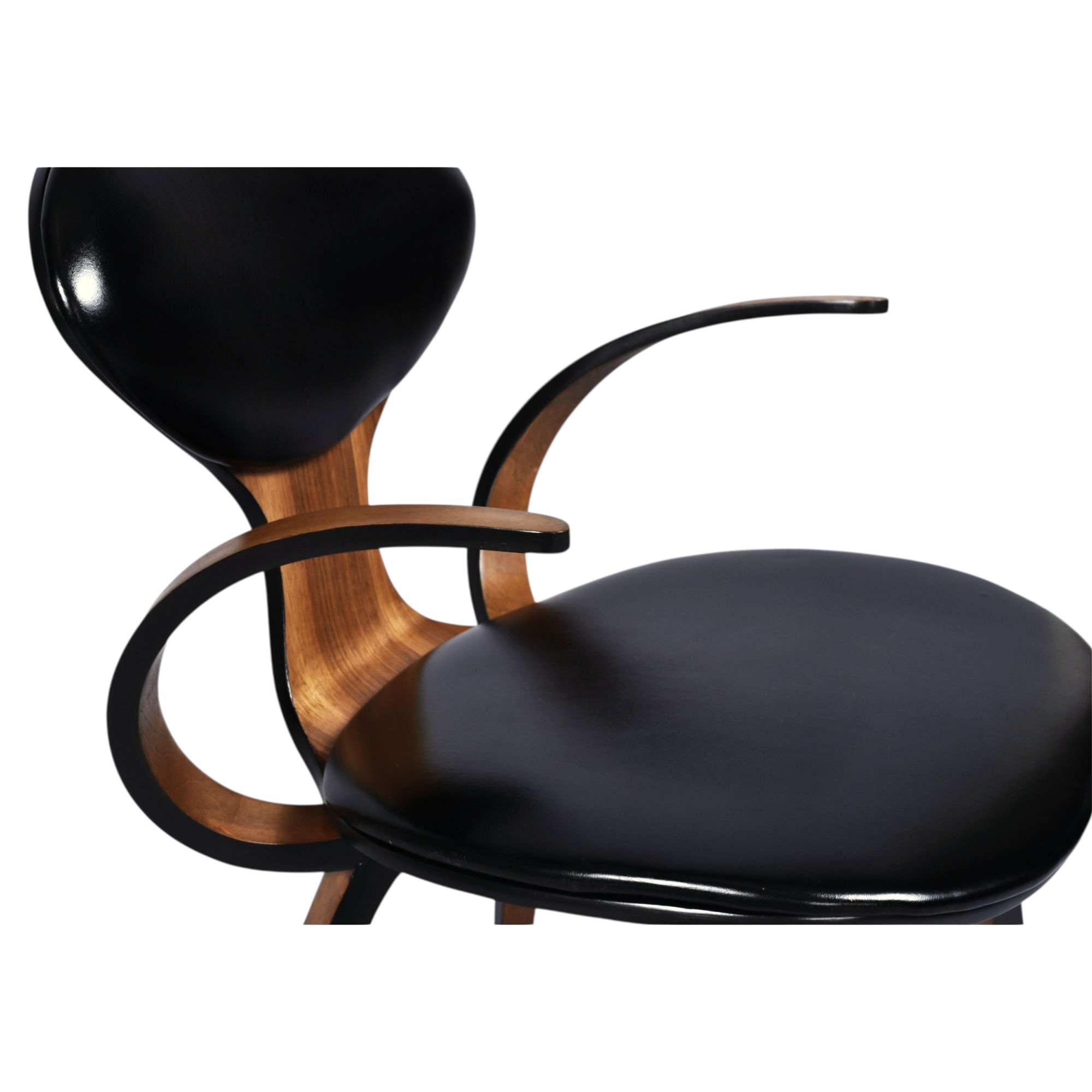
An uncommon armchair from the high point of American bent plywood, in a form that has been attributed at auction to George Mulhauser for Plycraft. It shares its vocabulary with the familiar Pretzel armchair: an oval padded back, a waisted plywood spine, and splayed sabre legs. The arms set it apart. Where the Pretzel closes each arm into a continuous loop that returns to the frame, here each arm springs from the edge of the seat, coils upward in a tight scroll, and ends in open air as a flat, rounded rest. Seen from behind, the two arms rise like a pair of parentheses around the sitter, and from the side each one reads as a single unbroken stroke. The looped version dominates what survives on the market; this open form is seldom seen.
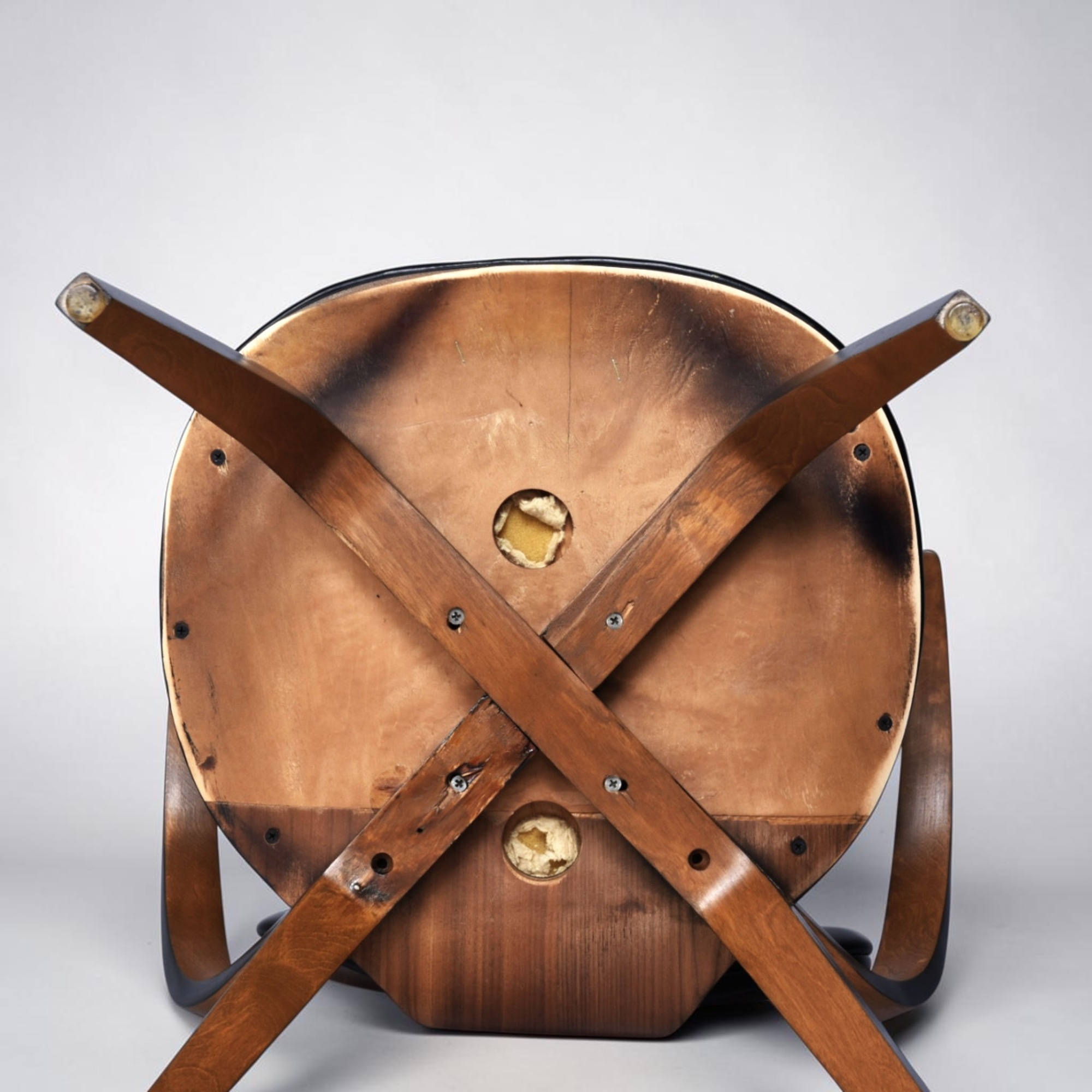
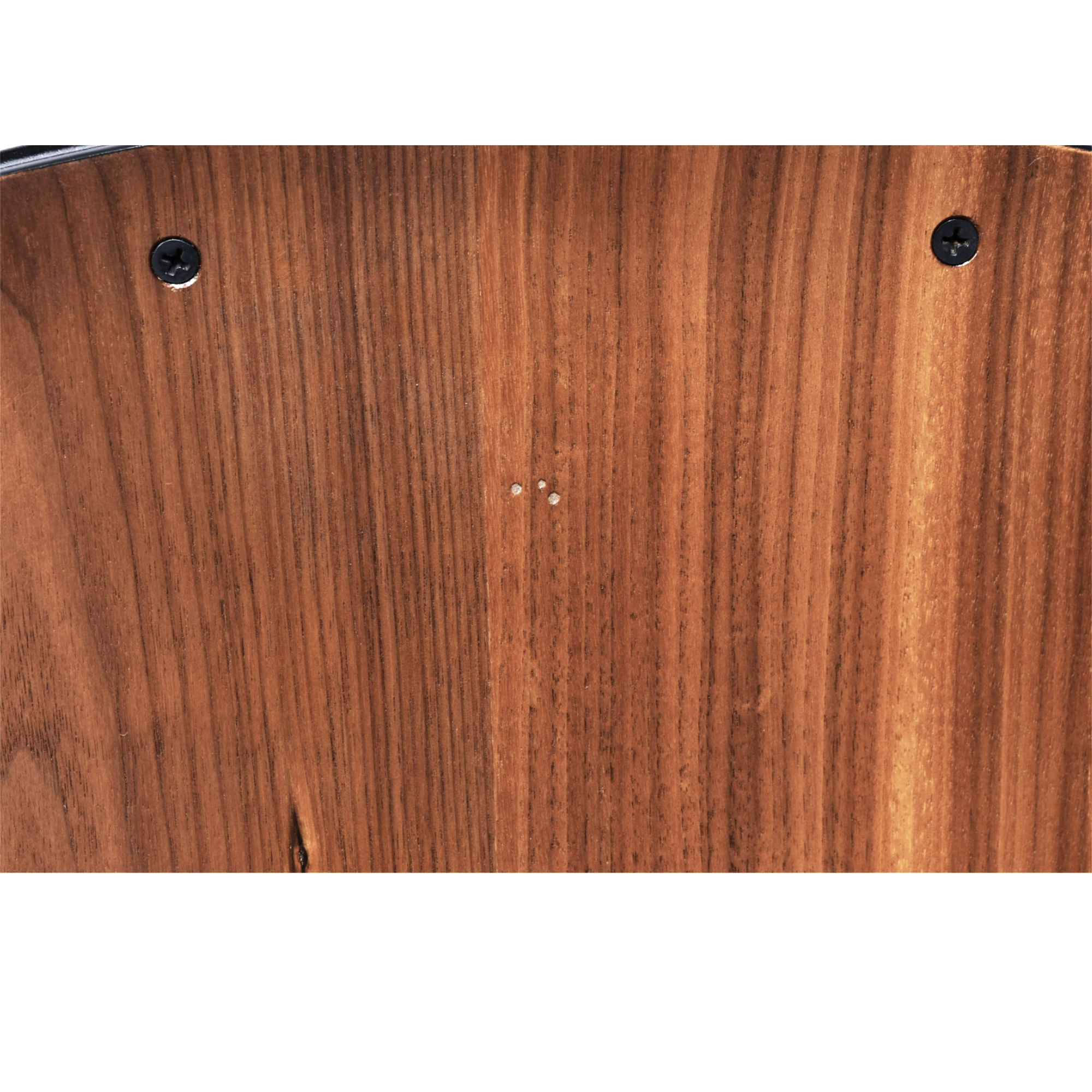
The construction rewards a close look. The back is one sculpted plywood member faced in figured walnut, narrowing sharply at the waist before flaring to meet the seat, with the padded oval cushion fixed through the shell with four screws. Each arm is a single steam-bent lamination that carries its load through the curve with no support at its tip, a cantilever that holds only when the plies are properly graduated and pressed. Beneath the seat, the four legs are formed from two continuous bent laminations that cross in an X and are screwed directly to the seat panel, the same direct, economical structure found in Plycraft’s documented production. Black-painted laminate edges trace every contour against the warm walnut tones, and the result reads almost as a line drawing in three dimensions.
Plycraft of Lawrence, Massachusetts, was among the most technically accomplished bent plywood manufacturers of the postwar era, producing work by Norman Cherner, George Mulhauser and its founder Paul Goldman. Mulhauser (1922–2002) is credited with conceiving the Coconut chair while in George Nelson’s studio, and he later designed the Mr. Chair and a range of bent plywood seating for Plycraft. This form appears in a 2023 auction record catalogued as attributed to Mulhauser, circa 1950–1959. The chair is unmarked, and the attribution has not been confirmed by period documentation; it is offered as attributed.
Condition:
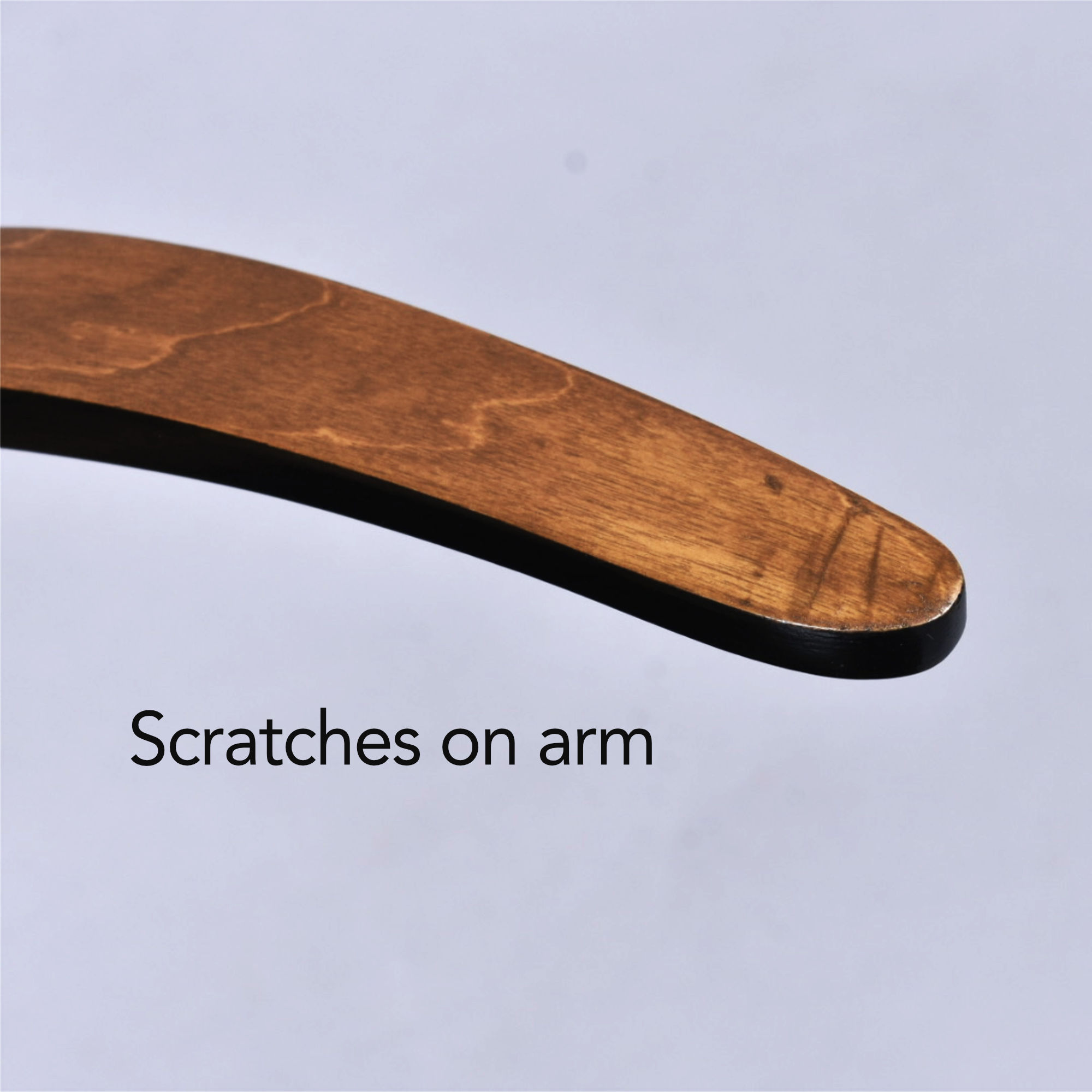
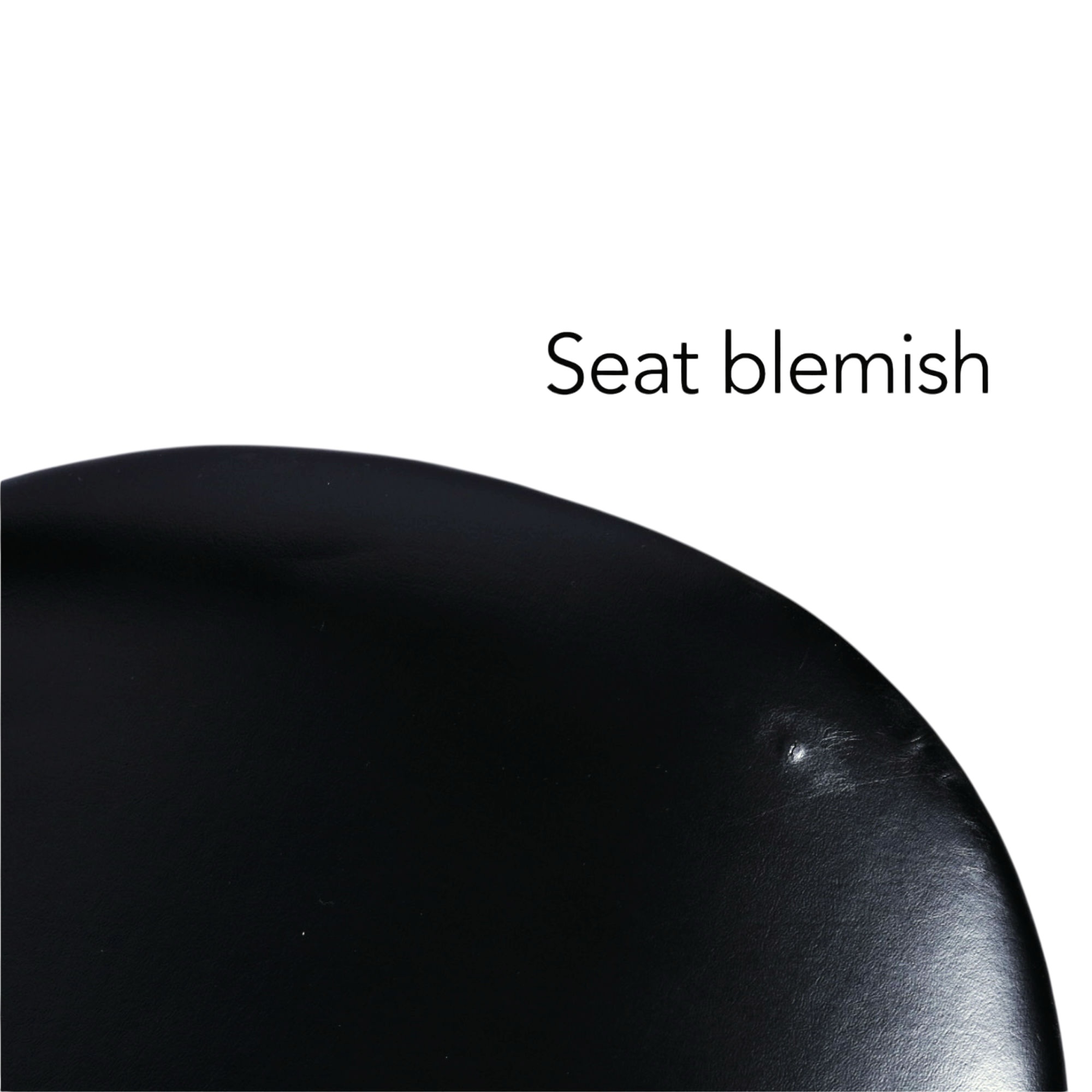
Refinished with new lacquer and black paint. Scuffed blemish and small pricks on seat vinyl. Three pinpoint dents on back of backrest, light scratches to one arm tip. Underside shows original wear, foam visible at two openings, minor splits at screw holes.
Dimensions:
– 20″ W x 21″ D x 30″ H (51 x 53 x 76 cm)
– Seat height: 18″ (46 cm)
– Arm height: 24″ (61 cm)